
Postcard from Paradou
Only one postcard from Paradou – as most of our few days in Paradou were spent with family, catching up and relaxing after our long journey from Devon.
 However, as luck would have it, our visit coincided with the summer fete. This included, on the Saturday, an Abrivado: a day of bulls running through the streets, being chased by young men trying to show off to the local lasses.
The Sunday was also fun: a festive meal for 600, hosted by the mayor (a lady), in which we were served tomato and mozzarella salad with French sticks of bread, a dish of steaming paella (a popular Spanish dish in France?), followed by cheese and then ice cream. And as much rose/red wine as you can consume.
We were entertained by a brass band and there was much laughter and dancing. It was a long day!
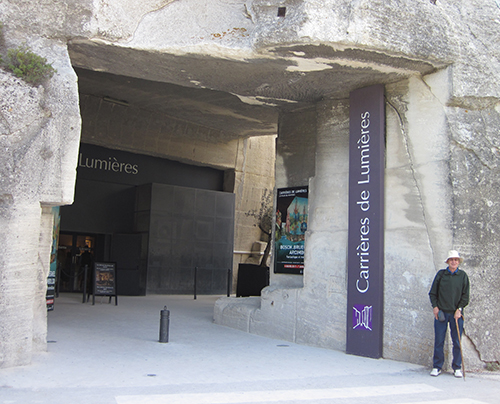
The one art experience was a visit to Les Baux-de-Provence, to see the fantastic exhibition at Carrières de Lumières which is open now until 7 January 2018.
Carrieres de Lumieres: Bosch, Brueghel and Arcimboldo. Fantastique et merveilleux.
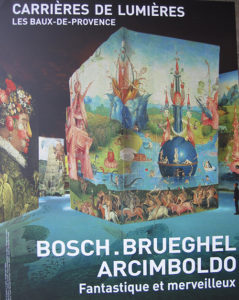
 The exhibition focused on Bosch, the Brueghel dynasty and Arcimboldo, prefaced by a tribute to Georges Méliès, the cinemagician.
For just six minutes, the audience shares the life of Georges Méliès, who is credited with being the inventor of the first special effects in film-making.
Then, for the rest of the show, Bosch, the Brueghel dynasty and Arcimboldo, these major 16th century painters, with their unbridled imagination and extraordinary creativity, are brought sharply into focus by the presentation of their images on the walls of this amazing venue.
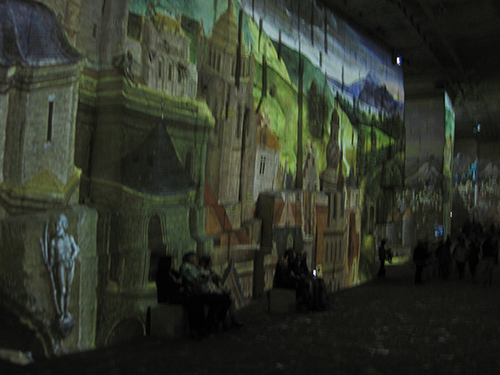
Within the exhibition space – effectively a cave, with no natural light – the floor is sandy and as uneven as the walls. The projections – using cutting-edge laser phosphor projectors – fall on all surfaces, including the ceiling.
The complete ‘show’ lasts for about 45 minutes, and there are plenty of ledges on which to perch or sit and take in the atmosphere.
It’s not a static show. With accompanying music, the images are brought to life through clever transitions.
Hieronymus Bosch
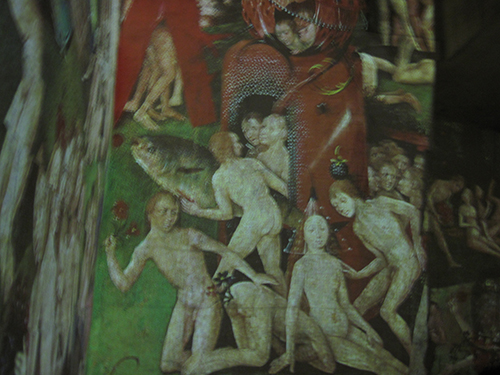
Bosch: The garden of earthly delights
As an example of the method of transitions, within this image, a tiny extract from Bosch’s The garden of earthly delights, various body parts of the people depicted – heads, arms, legs – moved back and forth to create the impression of a film, rather than a painting on canvas.
The original painting is a triptych, housed in the Museo del Prado in Madrid since 1939. It dates from between 1490 and 1510, when Bosch would have been 40 to 60 years old, and is probably his best-known – and most ambitious – surviving work.
Projected onto the walls and ceiling of the Carrières de Lumières, mermaids and giant strawberries glide past knights in shining armour astride flying fish.
It’s all very weird and wonderful!
And, definitely living up to the title of ‘sensual excess’.
The Brueghel dynasty
Works by all three of the Bruegel dynasty were featured: Pieter the Elder, Pieter the Younger, and Jan Brueghel.
The chosen musical accompaniament – a waltz – particularly suited the Breughels’ paintings. The image ‘rocked’ in time to the music, so the otherwise static images in the original paintings looked like they were actually dancing. Very clever.
The transitions worked well also when applied to crowded landscapes, with movement across the walls enhancing the sense of movement of those in the scene.
Guiseppe d’Arcimboldo
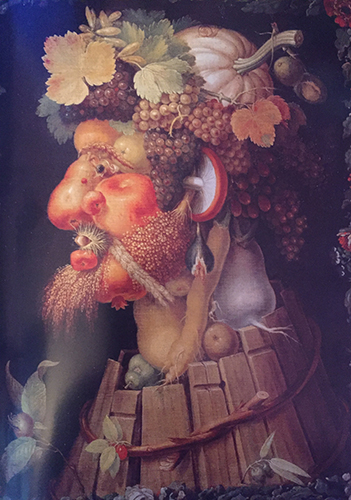 His Four Seasons were outrageous fun!
This is Autumn, with every part of the face created from seasonal produce.
Would I recommend you to visit this exhibition?
While the ‘art’ was impressive, the transitions brought everything to life. Discussing it afterwards with others who had visited the exhibition previously, this ‘modern’ approach to art is clearly not of universal appeal.
However, whether it was the addition of snow flakes gently falling on a wintry scene, or butterflies flitting across the sky, or heads, arms and legs moving, in my opinion such wizardy made the message more vivid and more immediately accessible.
The finale ‘Staircase to Heaven’ was particularly poignant.
Yes, definitely worth a visit!
This post is one of my POSTCARD series, sharing all things ART with you when I go travelling. It’s the first one for this particular trip. Watch this space!
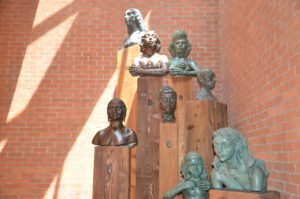 At the top of a sweeping staircase, under a magnificent chandelier, this selection of ‘busts’ caught our eye.
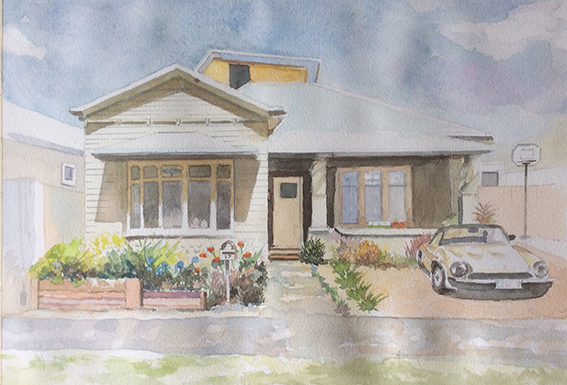
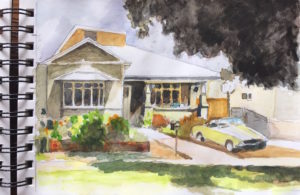
 Notice the two figures in the window?
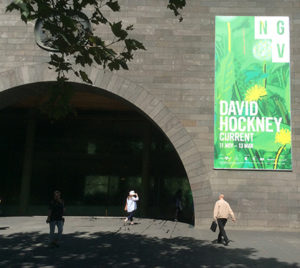 Anne and I wanted to return to the NGV (National Gallery of Victoria) as I’d seen so many great exhibits while she enjoyed lunch with a writer friend.
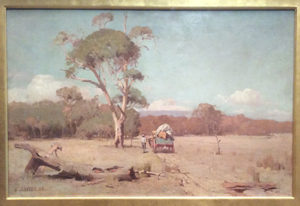 First, since Anne and I chose a particularly hot day to return to NGV – and to make the most of the air-conditioned environment – this painting by David Davies made us laugh.
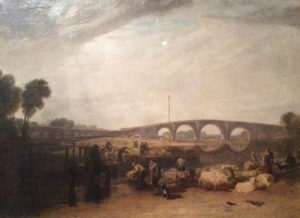 Second, is a gem by JMW Turner.
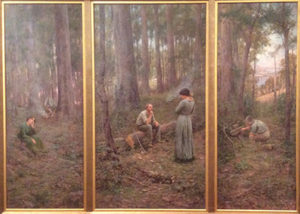 In ‘A lord of the bush’, Hans Heyson shows no sentiment. According to the description given by NGV, Heyson was profoundly inspired by the romantic landscape paintings of Constable (and others).
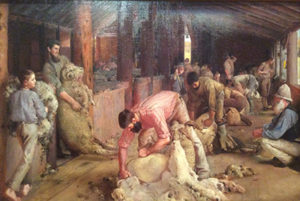 Then there was ‘The Shearing of the Lambs’ by Tom Roberts: the finest example of life in the outback in the nineteenth century.
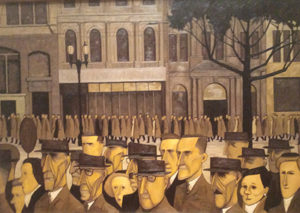 Collins St also features in this next image.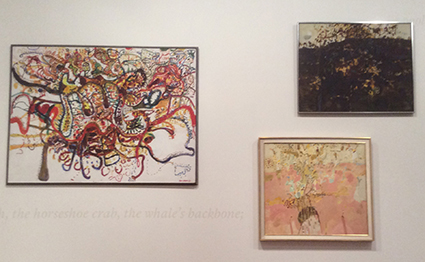
 waterfall which revealed words for a nanosecond, or the video of a Tai chi routine which demonstrated
 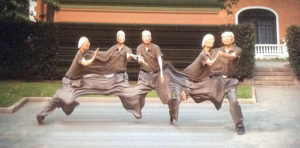 how we see movement.

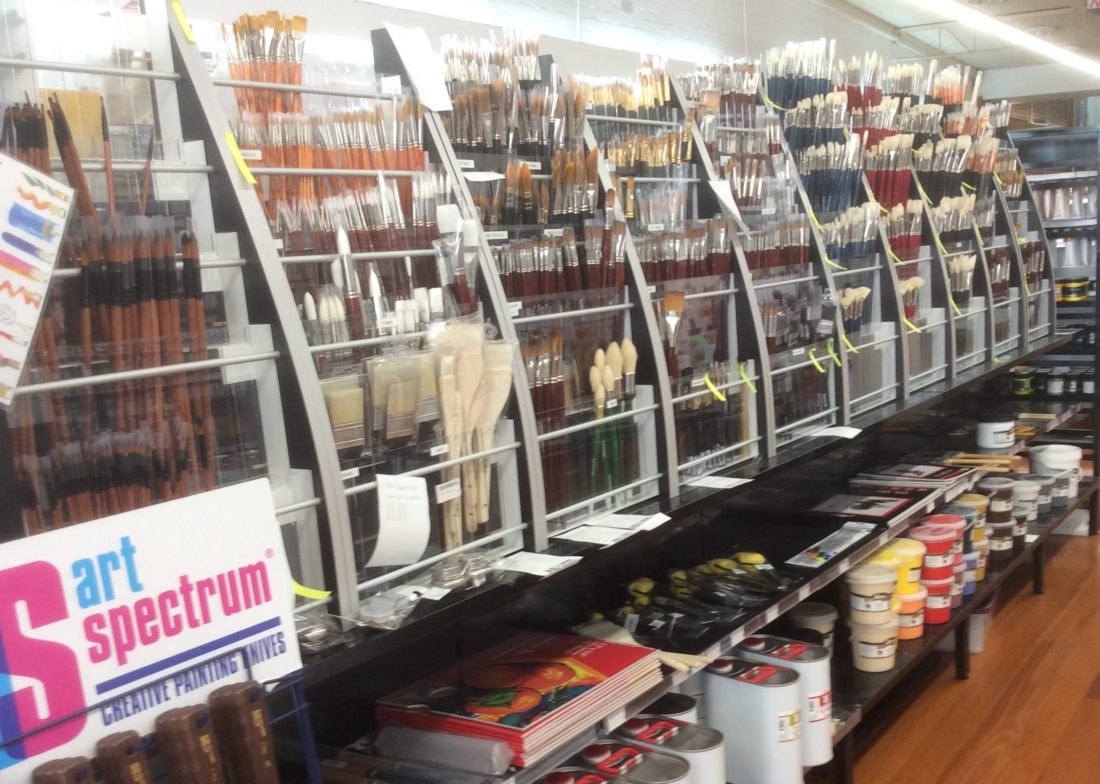
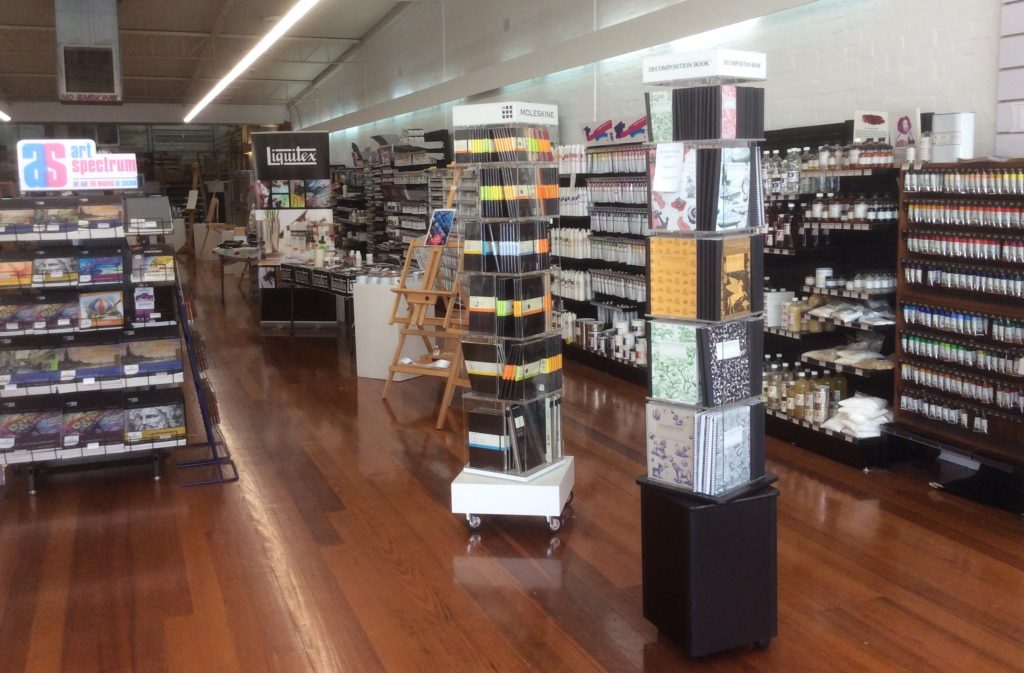
 Christmas in Melbourne seems an age ago, and we have seen in the New Year in style – and today I found an opportunity to spend my Christmas voucher, a generous gift from our hosts, on … brushes!
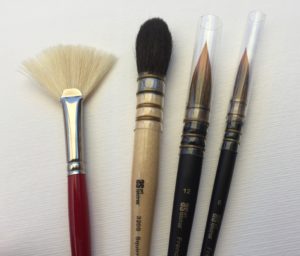 Four brushes!
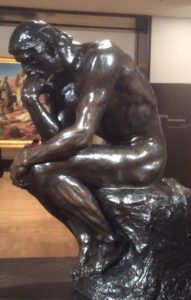
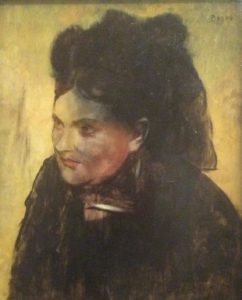 (Left) Rodin’s The Thinker: it was well worth spending time, admiring his undoubtable handiwork.